Planning for the Next Headline: Why Tariff Uncertainty Is Now a Permanent Condition of Sourcing
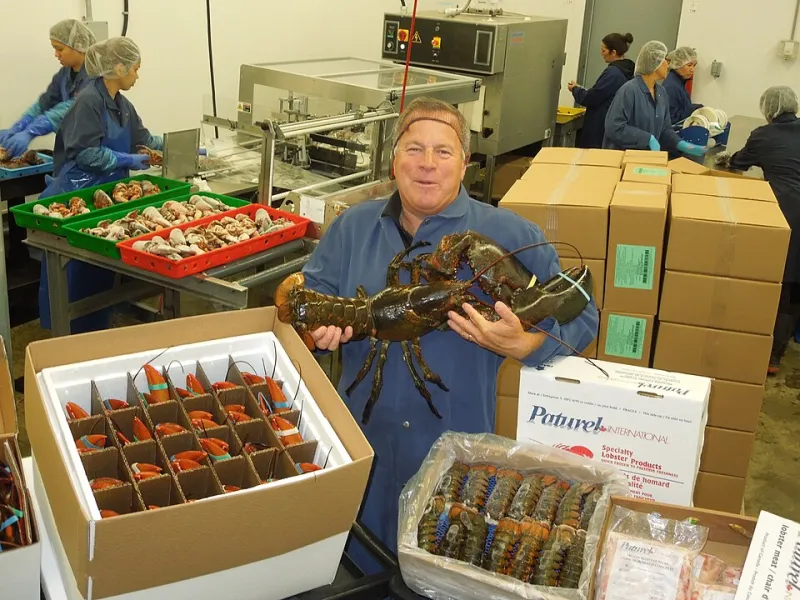
Photo: New Brunswick / Nouveau-Brunswick, Public domain, via Wikimedia Commons
There was a time, not so long ago, when an American wholesaler could lock in a supplier relationship in Vietnam or Guangdong with reasonable confidence that the rules of the game would hold for a decade. Duty rates changed slowly, if at all. Trade agreements, whatever their flaws, created horizons long enough to build businesses around. That world is gone, and it is not coming back.
The evidence is hard to argue with. Section 301 tariffs on Chinese goods, imposed in 2018, have been retained, adjusted, escalated, and selectively exempted across multiple administrations of both parties. Reciprocal tariff actions in recent years have moved rates by double digits with a press release's notice. Exclusions expire and are renewed unpredictably. For a buyer of consumer goods, industrial components, or raw materials, the landed cost of a product can change materially between the time a purchase order is signed and the time the vessel sails.
The instinctive response — wait for things to settle down — is understandable and, we would argue, wrong. Whatever one's views on the merits of any particular tariff, the strategic reality is that policy volatility itself has become a feature of the landscape, not a bug awaiting correction. Elections happen every two years. Enforcement priorities shift with each administration. The companies that will be standing in five years are not the ones betting on a return to calm, but the ones that have restructured their sourcing to absorb the next headline whatever it says.
The New Hedging Toolkit
Across the American import landscape, we see three hedges being deployed with increasing sophistication.
Dual-country production. The most straightforward hedge: qualifying the same product, or adjacent SKUs, in two countries. A kitchenware brand might run its premium line from a plant in Thailand and its volume line from Vietnam, with a Chinese supplier as a third leg. This is not cheap. Tooling, quality assurance, and minimum order quantities all multiply. But when a tariff action makes one origin suddenly uneconomical, the dual-source buyer redirects within a quarter while competitors spend a year re-sourcing. We have watched this play out with importers who diversified after 2018 — they were, bluntly, the only ones who slept well in recent years.
Tariff engineering. Less widely understood, and entirely legal when done properly: designing products, or their documentation, so they classify under a more favorable Harmonized Tariff Schedule provision. A garment assembled in a way that shifts its classification, a product configured so its country of origin is the country of substantial transformation rather than the country of final assembly — these are not loopholes; they are the ordinary consequences of the tariff code's own architecture. The caveat matters: this requires licensed customs counsel and rigorous documentation. The penalty for getting it wrong is not a tariff bill but a penalty bill.
Flexible contracts. The quiet revolution is happening in the purchase order itself. Buyers increasingly negotiate tariff adjustment clauses — provisions that split duty increases above an agreed threshold between buyer and supplier, or permit cancellation without penalty if duties rise beyond a defined percentage. Suppliers, for their part, are learning to price this risk in. The result is contracts that bend rather than snap.
A Tiered Playbook
Not every company can afford every hedge, and pretending otherwise helps no one. A realistic playbook, by size:
First-time importers. Do not attempt dual sourcing yet. Instead, buy flexibility cheaply: keep initial orders small, insist on FOB terms so you control the logistics and the data, and work with a customs broker who flags classification and exclusion opportunities proactively. Your hedge is optionality — the ability to walk away from a supplier without catastrophic tooling costs.
Growing mid-market importers. This is the tier where dual-country qualification starts to make sense, particularly for your highest-velocity SKUs. Begin with a second-source qualification project for your single most tariff-exposed product line. Negotiate tariff-sharing clauses into new contracts as they come up for renewal. And model your landed costs under three scenarios — status quo, 10-point escalation, and a full trade action — so you know your break-even before you need to.
Established wholesalers and distributors. At scale, the game shifts from hedging to structuring. Consider foreign trade zones or bonded warehousing to defer and, in some cases, reduce duty exposure. Formalize a tariff task force spanning sourcing, finance, and legal. Push tariff engineering reviews into your product development cycle rather than treating them as afterthoughts. At this tier, a well-run duty strategy can be worth more than a point of gross margin.
Certainty Is a Cost Center Now
The uncomfortable truth is that certainty has become something American buyers must purchase rather than expect. They purchase it in redundant tooling, in legal fees, in slightly higher unit costs from a second origin, in the administrative weight of scenario planning. It is tempting to see these as pure waste — money spent defending against a policy that might never arrive.
We take the opposite view. Every prior generation of importers paid for stability, indirectly, through the slower and more expensive trade regime that preceded today's. Today's buyers are simply paying for resilience in a more visible line item. The difference is that resilience, once built, compounds. A company with two qualified origins, flexible contracts, and a duty strategy is not merely protected against the next tariff action — it negotiates better with every supplier, because it can credibly walk away.
Tariff whiplash is not a phase. Treat it as an operating condition, budget for it like one, and the next headline — whatever it says — becomes an inconvenience rather than an extinction event.