When Price Stops Being King: The Quiet Shift Reshaping American Import Strategy
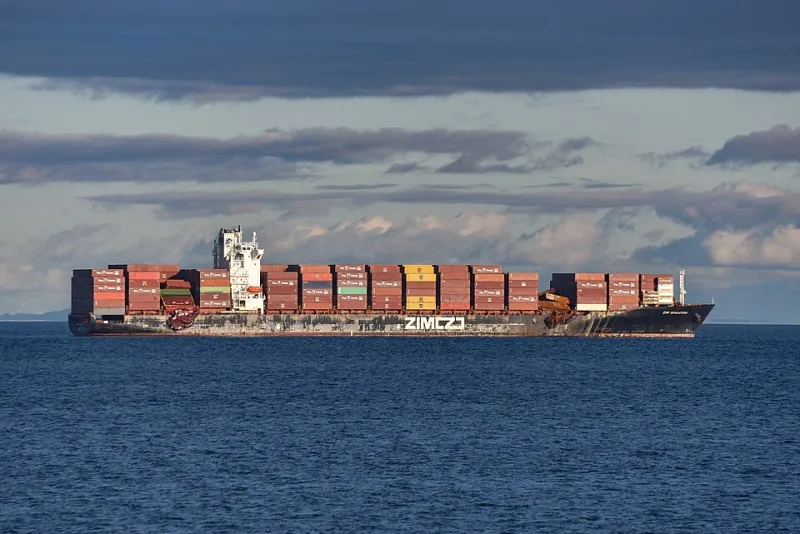
Photo: Gordon Leggett, CC BY 4.0, via Wikimedia Commons
For most of the past three decades, the arithmetic of global sourcing was simple. Find the lowest landed cost, lock it in, and treat everything else — transit variance, documentation quality, supplier solvency — as noise to be managed. That arithmetic no longer works.
Between tariff schedule revisions, ocean freight volatility, regional conflicts rerouting shipping lanes, and the steady churn of small manufacturers entering and exiting export markets, the cost of unreliability has quietly overtaken the savings from aggressive price negotiation. American buyers are learning, sometimes expensively, that a supplier who quotes two percent lower but delivers late twice a year is not a bargain.
The True Cost of a Cheap Quote
Consider what actually happens when a shipment slips. A container that misses its vessel can trigger expedited freight charges, production downtime for a manufacturer in Ohio or Georgia, contractual penalties downstream, and hours of staff time spent chasing updates across time zones. Industry estimates routinely place the full cost of a delayed shipment at several multiples of the original margin saved on the purchase order.
In this environment, the definition of a good trading partner has changed. It is no longer whoever sends the lowest FOB price. It is whoever makes your planning assumptions true.
What Reliability Actually Looks Like
Reliability is not a slogan; it is a set of verifiable practices. At Sikandara Enterprises, we organize them around three commitments that any US buyer should demand from any partner — including us.
Vetted supplier networks. A diversified trading company should be able to trace every product line back to audited manufacturers with documented quality processes and financial standing. When one region faces disruption, a partner with multi-region sourcing can reroute supply rather than simply apologize for it.
Transparent documentation. Clean bills of lading, accurate certificates of origin, correct HS classifications — these are unglamorous, and they are exactly what determines whether cargo clears customs smoothly or sits accruing demurrage. Buyers should treat sloppy paperwork as a leading indicator of deeper operational problems.
Predictable communication. A partner who confirms orders, flags delays early, and answers emails within a business day is worth more than a partner who saves you fifty cents per unit. Time-zone discipline and named points of contact are not perks; they are infrastructure.
Diversification as Risk Management
The most resilient importers have stopped concentrating their supply in a single country or a single supplier. Tariff actions can reprice a lane overnight; weather can close a port; a single factory can burn down. A diversified trading partner — one with reach across multiple sourcing regions and categories — functions as a form of insurance that no single contract clause can replicate.
This is the logic behind our founding ethos: Reliable Trading. Trusted Partnerships. Global Reach. Each phrase maps to a specific buyer anxiety. Reliability addresses the fear of disruption. Trust addresses the fear of opacity. Reach addresses the fear of concentration.
The Competitive Advantage No One Can Copy
Here is the irony of the current moment: as more importers chase reliability, dependability itself becomes scarce — and therefore valuable. A US company whose shipments arrive when promised can carry less safety stock, quote shorter lead times to its own customers, and win business on service while competitors hedge with padded inventories.
Reliability, in other words, compounds. It is the rare competitive advantage that strengthens the longer you hold it, because every on-time shipment adds to the track record no rival can counterfeit.
The buyers who recognized this early are no longer asking, "What's your best price?" They are asking, "What's your best promise — and can you keep it?" That question is the new starting point of serious global trade.