One Shipment, Four Intermediaries: Untangling the Cast of Characters in Your Import Chain
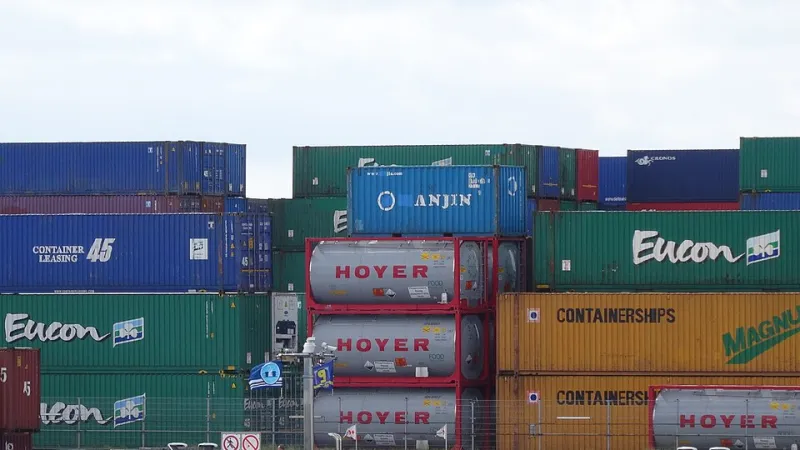
Photo: AgainErick, CC BY-SA 4.0, via Wikimedia Commons
Ask a first-time importer to describe how a container gets from an overseas factory to their loading dock, and you will usually get a confident answer that is roughly half right. The goods go on a ship, the ship crosses an ocean, and then a truck shows up. Everything in between — the paperwork, the port fees, the customs filings, the drayage, the mysterious 'handling' charges — tends to blur into a single foggy line item.
That fog is expensive. It is also entirely avoidable, because the international supply chain is not really one process. It is four or five distinct professions, each with its own license, liability, and fee structure, cooperating (and occasionally pointing fingers at each other) on your behalf. Understanding who does what is the first step toward knowing which of them you actually need.
A Hypothetical Shipment, From Factory to Dock
Consider a mid-sized housewares company in Columbus, Ohio — call it Buckeye Home Goods — ordering 800 cartons of stainless steel cookware from a manufacturer in Guangdong Province, China. The purchase order is signed. What happens next involves four separate roles that American buyers frequently confuse.
The manufacturer's side. The factory produces and packs the goods. Depending on the Incoterms you negotiated, the factory's responsibility may end the moment the cartons leave its gate (EXW), when they are loaded onto a vessel (FOB), or when they arrive at your port (CIF). This single clause in your contract determines how many of the following professionals you are paying for — and whether they work for you or for someone else.
The freight forwarder. The forwarder is, in essence, a travel agent for cargo. It does not own the ships, planes, or trucks. Instead, it buys space from carriers in bulk and resells it, while assembling the logistics puzzle: booking the vessel, arranging drayage to the port, preparing the bill of lading, and coordinating the ocean leg. A good forwarder earns its fee through carrier relationships and problem-solving — rerouting around a port congestion event, for instance, is where the good ones justify their margins.
The customs broker. The broker is a licensed specialist — licensed by U.S. Customs and Border Protection, not by any forwarder — whose job is to get your goods legally through the border. They file the entry, classify your product under the Harmonized Tariff Schedule, calculate duties, and manage any examinations. Classification errors are among the costliest mistakes a new importer can make; a broker's expertise here is not a luxury. Note that many forwarders have in-house brokerage arms, but the roles are legally and functionally distinct.
The trading company. This is the role most often misunderstood — partly because it overlaps with the others. A trading company is a commercial intermediary: it buys goods from manufacturers and sells them to you, typically taking title to the goods, consolidating orders from multiple factories, and handling quality control and export documentation. Unlike a forwarder or broker, the trading company has a margin in the product itself, not just the movement of it. For buyers too small to manage five supplier relationships directly, a reputable trading company can function as a single accountable counterparty. For larger buyers, that same margin is money that might be better spent building direct supplier relationships.
The agent. Finally, an agent — sometimes called a sourcing or buying agent — works on your behalf, usually for a commission, to find and vet suppliers, negotiate prices, and inspect goods. Agents do not take title and typically do not move freight. Their value is local knowledge and accountability on the ground.
Where the Fees Stack Up
On Buckeye Home Goods' shipment, the costs might look like this: the forwarder charges an ocean freight rate plus origin handling and documentation fees; the broker charges an entry fee plus a per-line processing charge; U.S. duties are assessed separately; and if a trading company sits in the middle, its margin is embedded in the unit price — invisible on any invoice, but very real.
The problem is not that these fees exist. Each role performs genuine work. The problem is duplication. A buyer who signs CIF terms with a supplier, uses a forwarder recommended by that supplier, and then hires a second broker 'just in case' is paying two or three parties to do overlapping work. Conversely, the buyer who insists on FOB terms, chooses their own forwarder, and engages a broker directly has visibility — and negotiating leverage — at every step.
Build or Buy: A Decision Checklist
So should a small or mid-sized American business internalize this expertise or outsource the whole chain? Work through these questions:
- Volume. Under roughly 50–100 containers a year, building an in-house logistics team rarely pays. Above that threshold, the math starts to change.
- Product complexity. Regulated goods — food-contact materials, electronics, textiles subject to quota — demand professional brokerage regardless of volume.
- Supplier sophistication. A large manufacturer with an experienced export department needs less hand-holding than a small workshop shipping overseas for the first time.
- Risk tolerance. If a two-week delay would jeopardize your retail commitments, pay for the forwarder with real contingency capability, not the cheapest quote.
- Control. Do you want visibility into each handoff, or a single phone number to call when something goes wrong? Both are legitimate strategies; they just have different price tags.
For most businesses in the middle of the market, the answer is a hybrid: outsource execution, but own the decisions. Choose your own forwarder and broker rather than accepting the supplier's picks. Understand your Incoterms cold. Review the landed cost breakdown quarterly. And when a trading company or agent is in the mix, ask pointed questions about who holds title, who insures the goods, and who is liable when a carton arrives damaged.
The intermediaries in your import chain are not the enemy. Unexamined relationships are. Map the roles, price them separately, and the fog clears — one shipment at a time.