Six Weeks at Anchor: Reconstructing the Slowest Shipment of the Season
The container left Ho Chi Minh City on a Tuesday in early August. By the time it was finally unloaded in Los Angeles, Black Friday planning meetings had already begun — without the merchandise that was supposed to anchor them.
This is the anatomy of a supply chain failure that, on paper, never should have happened. The factory shipped on time. The freight forwarder booked the vessel. The buyer had credit lines ready. And yet a routine 6,000-mile journey became a six-week ordeal that cost every party in the chain something. Reconstructing it, step by step, reveals lessons no sourcing manual quite captures.
Hour Zero: The Missed Cutoff
The failure began with a two-hour window.
The supplier's trucking contractor in Vietnam arrived at the port terminal ninety minutes past the container cutoff — the deadline by which loaded boxes must gate in to make the scheduled vessel. The cause was mundane: a documentation error at a weigh station that required the driver to return to the factory for a corrected packing list.
The container missed the intended sailing. The next available vessel, on the same alliance route, departed eleven days later. In a healthy market, that would be an inconvenience. In August, during the pre-peak-season scramble for vessel space out of Southeast Asia, it was the beginning of a cascade.
The Roll, the Rollover, and the Reroute
Overbooked vessels routinely "roll" cargo — bumping booked containers to later sailings when space runs short. Our container was rolled twice before it finally loaded, adding another week at origin. Demurrage charges, the fees terminals levy on containers sitting inside the port, began accruing on day four.
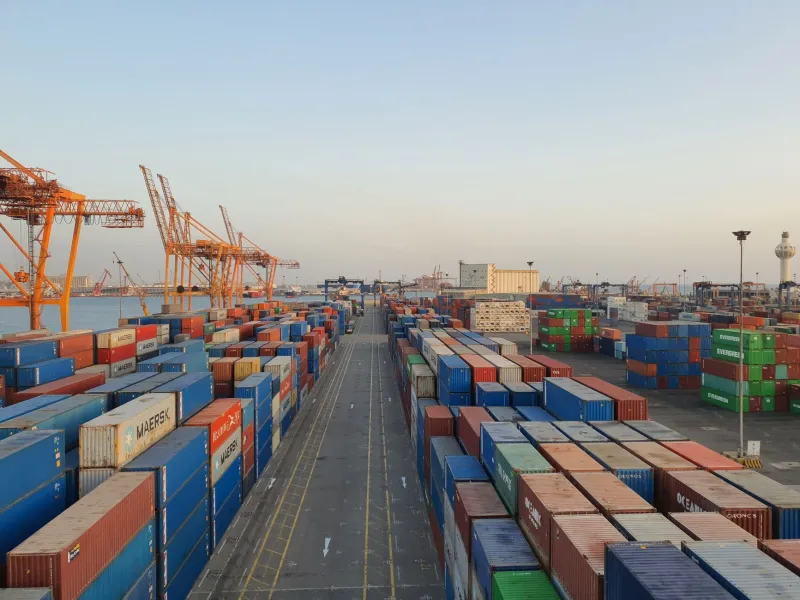
When the box finally reached Long Beach, it encountered the second half of the problem: chassis shortages and terminal congestion pushed the pickup appointment out ten days past discharge. Detention fees — the mirror image of demurrage, charged for keeping the carrier's container outside the terminal — joined the accumulating bill.
By week five, the freight invoice looked nothing like the original quotation.
Who Actually Paid: A Contract Clause Post-Mortem
The most instructive part of this story is not the delay itself but the allocation of its cost. That allocation was decided months earlier, in a purchase order most people never read closely.
The buyer had negotiated Incoterms 2020 FOB (Free On Board) terms. Under FOB, risk and cost transfer to the buyer once the goods are loaded on the vessel at the origin port. Here is the critical nuance that cost the buyer dearly: because the container missed the vessel before loading, the supplier technically bore the cost of getting it to port — but the buyer, as the party who had contracted the freight forwarder, absorbed the rolled bookings, the destination demurrage, and the detention.
The buyer's purchase order contained no clause addressing delivery deadlines tied to late-fee consequences, and no force majeure language covering port congestion — which carriers and terminals typically classify as a commercial condition, not an act of God. The supplier, meanwhile, faced no contractual penalty at all, because the goods had shipped "on time" according to the production schedule; the port cutoff miss was logged as a logistics failure, not a production one.
Total damage: approximately $18,400 in combined demurrage, detention, per-diem charges, and expedited inland transport to partially recover the timeline — plus an estimated $60,000 in lost holiday-season sales on goods that arrived after the retailer's stated ship window.
The Three Lessons Buried in the Invoice
1. Cutoffs are contractual events, not operational details. The difference between a two-hour miss and a clean loading was never written into any agreement. Sophisticated buyers now specify vessel-loading deadlines in their POs, with defined remedies when either party causes a missed sailing.
2. Incoterms determine the blast radius of a delay. Under FOB, the buyer owns everything after the ship's rail. Under DDP, the seller does. Neither is inherently better — but choosing terms without mapping the fee structure at each handoff point is how a $200 documentation error becomes an $18,000 freight bill.
3. Congestion is not force majeure unless you say it is. Port congestion, chassis shortages, and vessel rollovers are now recurring features of the trade lanes serving American ports. Contracts drafted in 2019 often treat them as freak events. They are not.
A Pre-Peak-Season Red Flag Checklist
Before your next peak-season booking, audit for these warning signs:
- Vague cutoff commitments. If your forwarder cannot state the container cutoff and documentation cutoff for the booked vessel in writing, assume the booking is soft.
- No rollover protection. Ask whether the booking includes priority loading status or NAC (non-cancellable) terms on the specific vessel, not just the lane.
- Silent contracts on demurrage responsibility. Confirm in writing who pays when the terminal, not either trading party, causes the delay.
- Single-route dependence. A lane with one viable alliance option has no pressure-release valve. Price the alternative before you need it.
- No buffer in the delivery window. If your retail ship date leaves fewer than three weeks of slack after estimated arrival, you are planning to be lucky.
The Uncomfortable Conclusion
No single actor in this story was negligent. The factory produced on schedule, the forwarder booked competently, the terminal processed cargo at its posted rates. The failure was structural — a chain with no slack, governed by contracts written for a calmer era of ocean freight.
The companies that weather these disruptions best are not the ones with the cheapest rates. They are the ones whose agreements anticipate the missed cutoff, the rolled booking, and the congested terminal — and who decided, in calm months, who pays when the water gets rough.