While America Carves the Turkey, the Cranes Keep Moving: Lessons in Operational Grit From Holiday Logistics
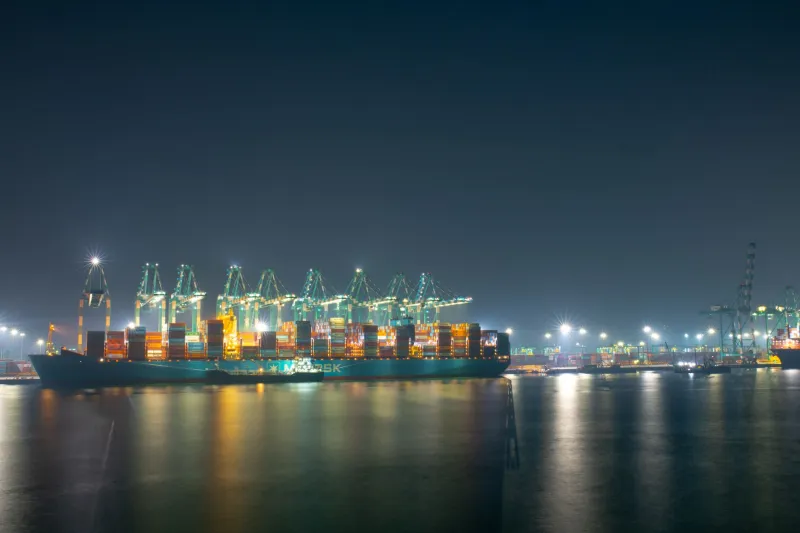
Somewhere in the Port of Savannah on the fourth Thursday of November, a gantry crane operator will work a shift that most Americans will never think about. The vessel alongside her is loaded with electronics bound for distribution centers in the Midwest. The containers have to move whether or not anyone is celebrating, because the ship's berth window was booked months ago and the ocean does not observe federal holidays.
This is the annual collision at the heart of American commerce: the weeks between Thanksgiving and New Year's, when domestic consumption peaks precisely as much of the country's workforce steps away. Ports, freight forwarders, customs brokers, and trading houses absorb that friction so the shelves stay full. Having spent years coordinating shipments through this stretch, we at Sikandara Enterprises have come to believe the holiday logistics season offers a masterclass in operational discipline — one that applies far beyond the terminal gate.
The Calendar Doesn't Pause for the Calendar
Peak season is not a surprise. Retailers forecast it, ocean carriers publish their schedules, and terminal operators staff for it. Yet every year, businesses find themselves flat-footed — not because the volume was unpredictable, but because their internal operations assumed a normal rhythm that the season simply doesn't permit.
The logistics world plans differently. A container vessel arriving at Los Angeles or Long Beach in early December is the product of a planning chain that began in summer: factory production slots, vessel bookings, inland rail allocations, and drayage capacity, all sequenced backward from the shelf date. Nothing is left to improvisation, because improvisation at scale is expensive.
The lesson for any American business — a distributor, a manufacturer, a service firm with seasonal demand — is that peak periods are won in the quiet months before them, not survived during them.
Redundancy Is Not Waste
Port operations are built on the assumption that something will go wrong. A crane breaks down. A trucker misses an appointment window. A customs hold appears without warning. Terminal plans include buffer time, backup equipment, and contingency routings not because operators are pessimistic, but because they've learned that single points of failure are where peak seasons go to die.
Most small and mid-sized American businesses run leaner than that — sometimes admirably, sometimes dangerously. The office manager who is also the only person who understands the inventory system is a single point of failure. The one supplier who can produce your key component is a single point of failure. The holiday shipping season makes this visible: companies with alternate carriers and pre-cleared paperwork kept goods flowing through congestion; companies without them watched their Q4 margins evaporate in detention and demurrage fees.
Redundancy costs money in good times. In bad times, it is the difference between an inconvenience and a crisis.
The Handoff Is Where Quality Lives
A single imported container may pass through a dozen hands: factory, trucker, terminal, vessel, terminal, rail, warehouse, final-mile. Each transfer is an opportunity for error, and experienced logistics professionals obsess over them — standardized documentation, clear responsibility at every boundary, confirmation at each step.
Contrast that with how work moves inside many companies. Projects get handed off between departments through a hallway conversation or a forwarded email thread. Context is lost, deadlines blur, and everyone blames the last person in the chain. The shipping world solved this decades ago with a simple principle: no handoff without a record, and no record without a named owner on both sides.
Adopting that discipline — in client onboarding, in interdepartmental work, in vendor transitions — costs almost nothing and eliminates a remarkable share of internal friction.
Grace Under Volume
There is also a temperament worth borrowing. Terminal managers working Thanksgiving week do not have the option of panic. Volume surges, systems strain, and the professional response is triage: identify what must move now, what can wait, and what needs escalation — then communicate clearly with everyone downstream.
Business owners facing their own seasonal crunch would do well to pre-decide their triage rules. Which customers get priority when capacity tightens? Which internal projects get paused? Deciding these questions in October is strategy; deciding them in the middle of the crunch is firefighting.
A Season for Gratitude, and for Preparation
The goods on American tables and shelves this holiday season arrived through an unbroken chain of people who worked while others rested. That chain deserves acknowledgment — and, more usefully, imitation. The habits that keep global freight moving through the busiest weeks of the American calendar are not exotic. They are planning backward from demand, building in redundancy, documenting every handoff, and staying calm when volume spikes.
Businesses that adopt them will find that the holidays stop being something they survive and start being something they've already prepared for. That, more than any single shipment, is what reliable trading partnerships are built on.