The Duty-Free Clock: How Bonded Storage Rewrites the Importer's Cash Calendar

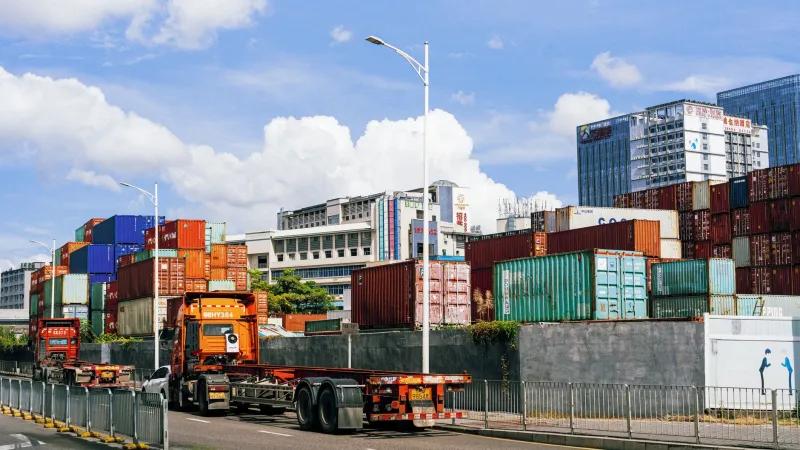
Photo: Calistemon, CC BY-SA 4.0, via Wikimedia Commons
American importers rarely lack warehouse space. What they lack is time — the working capital, the calendar room, and the decision window between a container arriving at a port and its contents becoming a permanent financial obligation. A customs bonded warehouse does not solve the storage problem. It solves the timing problem. That distinction is the difference between renting square footage and buying optionality.
The mechanics are straightforward, which is partly why they are so often overlooked. Goods admitted to a bonded warehouse remain under Customs supervision and are not entered for domestic consumption. Duties are deferred until the merchandise is withdrawn and released into US commerce. Goods that are re-exported from the warehouse leave without duty ever being assessed. In an era when tariff exposure can shift on the strength of a single Federal Register notice, that pause is not a convenience. It is a hedge.
The Cash Flow Mechanics of Deferral
A conventional import entry triggers duty at the moment of entry. A bonded warehouse entry does not. For importers carrying high-value, high-duty merchandise, the deferral window can move five or six figures of working capital from one quarter into the next. That cash can fund inventory turns, cover receivables gaps, or simply sit as a buffer through a season when the cost of borrowing is unforgiving.
The deferral is not a discount, and it should never be presented as one. Duties are still owed when goods are withdrawn into domestic commerce. Certain fees — merchandise processing fees and similar charges — may still attach at the time of entry, so the prudent approach is to model the full landed cost rather than the headline duty rate. The advantage is not a lower obligation. It is a later one, at a moment the importer chooses.
For distributors with seasonal peaks, that timing can be decisive. Inventory that lands in late September for a November and December selling season can wait in bond while the sales forecast firms up. Goods can be inspected, relabeled, or consolidated in a bonded facility before the withdrawal decision is made. Duties are paid on the quantities that actually move into commerce, not on the quantities that were hoped for.
Where Bonded Storage Earns Its Keep
The most common mistake is treating bonded warehousing as an emergency valve — a place to park containers when a DC is full. That is a legitimate use, but a narrow one. The stronger applications are strategic:
- Re-export optionality. Goods can be held while a buyer is confirmed, quality is verified, or a jurisdiction's tariff treatment changes. Merchandise that is ultimately sold abroad never pays US duty at all, provided it leaves under the proper procedures.
- Seasonal and promotional staging. Holiday inventory, trade-show stock, and short-window promotions can be positioned in bond and released in tranches that match demand rather than a shipping schedule.
- Tariff and regulatory timing. When classification, valuation, or exclusion decisions are pending, bonded storage keeps goods in a state of commercial limbo rather than forcing an immediate, irreversible entry.
- Manufacturing and assembly inputs. In some configurations, raw materials and components can be held in bond while production schedules are synchronized, with duty assessed only when the finished goods are withdrawn.
A bonded warehouse is not an Foreign Trade Zone, and the two should not be conflated. An FTZ operates under a different regulatory framework and offers benefits that a bonded warehouse does not, notably around inverted tariffs and certain production activities. A bonded warehouse is simpler and often faster to stand up, but narrower in scope. Choosing between them is a modeling exercise, not a matter of preference.
The Operational Discipline It Demands
Bonded storage is a privilege extended by Customs and Border Protection to a licensed proprietor, and the importer inherits obligations along with the benefits. Records must be accurate. Withdrawals must be documented. Goods must generally be withdrawn in the condition in which they were admitted, though certain manipulation — labeling, repacking, cleaning, sorting, and similar operations — is permitted.
Importers should confirm several things before committing inventory. Does the proprietor hold a valid bonded warehouse license for the relevant port and commodity type? Is the facility's bond adequate for the volume planned? Who is responsible for the entry documentation, and how will the withdrawal schedule be managed? What is the storage duration policy, and how does it align with the five-year outer limit that generally applies to merchandise held in bond?
The practical risks are rarely regulatory. They are operational. A withdrawal calendar that slips can turn a deferral into a late-season scramble. Poor segregation can turn a straightforward inventory into a reconciliation project. Insurance must reflect the fact that goods in bond are still the importer's financial exposure, even though they are not yet the importer's customs liability.
Matching the Tool to the Decision
A useful test is to ask what decision the deferral is buying time for. If the answer is "nothing in particular," the warehouse is simply an expensive parking lot. If the answer is a pricing decision, a re-export evaluation, a season's sell-through, a pending ruling, or a financing constraint, the deferral has a purpose and can be priced against it.
The comparison should be explicit. Storage fees, handling, insurance, and administrative overhead belong on one side of the ledger. The cost of capital, the risk of markdowns from premature entry, and the value of optionality belong on the other. In many cases the bonded option is clearly superior; in some it is not. The point is to run the arithmetic rather than default to habit.
A Practical Starting Point for 2026
The importers who use bonded storage well tend to share a short list of habits. They map duty exposure by SKU and by season, so they know which goods are worth deferring. They align withdrawal schedules with sales forecasts rather than with container arrivals. They maintain a direct relationship with the warehouse proprietor rather than routing everything through a forwarder. And they review the arrangement annually, because the tariff environment that justified the structure in one year may not resemble the one that prevails in the next.
At Sikandara Enterprises, we have watched enough importers treat customs storage as an afterthought to conclude the opposite: it belongs in the sourcing plan, not the overflow plan. A bonded facility is not a place to put surplus inventory. It is a place to put a decision you are not yet ready to make — and in a trading environment where timing is often worth more than price, that is a lever worth pulling deliberately.