Splitting the Load: When a Purchase Order Should Travel in More Than One Shipment
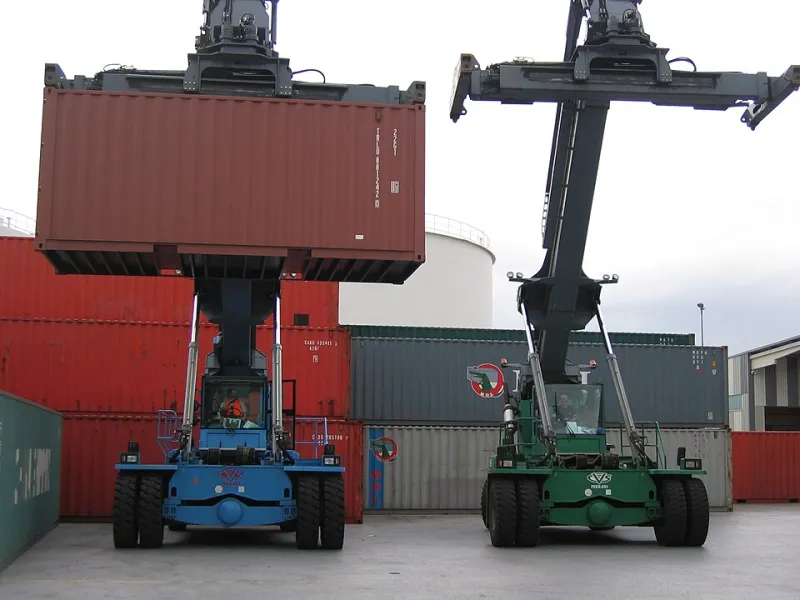
Photo: No machine-readable author provided. [email protected]~commonswiki assumed (based on copyright claims)., Public domain, via Wikimedia Commons
Most purchase orders are written as if a single container, a single sailing, and a single arrival date were the natural order of things. They are not. They are a convenience. When the calendar, the factory, and the balance sheet pull in different directions, breaking an order into two or three movements can preserve a season that a single shipment would have lost. The decision deserves more rigor than it usually receives.
Where the Case for Splitting Is Strongest
The strongest argument for a partial shipment is not flexibility for its own sake. It is margin that would otherwise evaporate.
Seasonal windows that close early. A retailer whose promotional floor set lands in the second week of November cannot monetize a container that berths in December. Shipping a first tranche of the highest-velocity SKUs in September and the balance in October may cost more per unit in freight, but it converts full-price selling days into revenue that a single late arrival would have surrendered to markdowns. The math is usually decided by sell-through curves, not by freight quotes.
Supplier capacity that ramps rather than switches on. Factories rarely produce a full order in one uninterrupted run. A supplier sharing capacity across several buyers may offer 40 percent now and 60 percent in five weeks. Refusing the split often means accepting a later single shipment than the supplier's first available window, which is a worse outcome disguised as simplicity.
Working capital and payment structure. Two shipments can be matched to two payment events, two letter-of-credit drawings, or two receivable cycles. For importers financing inventory on revolving credit, earlier receipt of the fastest-selling portion shortens the cash conversion cycle even when total landed cost rises slightly.
Validation before commitment. A first production run for a new supplier, a new SKU, or a revised retail-ready pack is a test, not a purchase. Taking a small first tranche to confirm quality and compliance before releasing the balance is prudent risk management, particularly with a partner whose process capability has not yet been proven across a full run.
The economics of container space. Sometimes the split is not about time at all. If one SKU is delayed at the factory, shipping the remaining 92 percent on schedule and bridging the gap later generally beats holding an entire container at origin to protect a freight rate.
What the Split Actually Costs
Partial shipments are frequently sold internally as a timing decision. They are a cost decision that happens to have a timing benefit, and the cost side is where proposals go wrong.
Freight does not divide evenly. Two movements rarely cost twice one movement, but they rarely cost much less either. Minimum chargeable weights, less-than-container-load consolidation fees, destination handling, chassis charges, drayage, and appointment scheduling all apply per move. Volume discounts tied to full-container quantities may be forfeited entirely.
Entry costs are per entry, not per order. Merchandise processing fees carry minimum and maximum thresholds per entry, and broker entry fees, harbor maintenance fees, and any examination costs attach to each filing. Two small entries can cost materially more than one consolidated entry of the same value. Additional commercial invoices, packing lists, and importer security filings multiply with each tranche.
Receiving labor and reconciliation. Each arrival generates an advance ship notice, a receiving appointment, a discrepancy window, and an invoice to match. Warehouses operating near dock capacity during peak weeks price that labor accordingly.
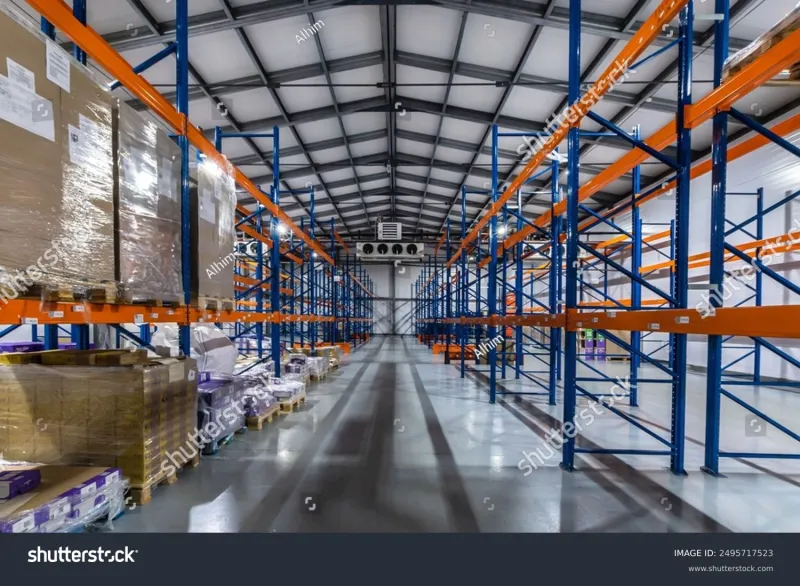
Stranded inventory is the quiet killer. A partial arrival is not automatically sellable. Kitting programs, component sets, display fixtures, and floor-ready assortments may be unusable until the balance lands. The first tranche then occupies rack space, accrues carrying cost, and ages while providing no revenue. For some categories, a split converts one late shipment into two slow ones.
Negotiating the Split Without Spending Goodwill
Suppliers read a request to split as a request to replan production, re-quote materials, and absorb administrative work. Framed poorly, it sounds like indecision. Framed well, it sounds like a shared commercial problem.
Lead with the data the supplier cannot see: sell-through by week, the promotional calendar, the markdown exposure that follows a late arrival. Then propose a schedule rather than a preference — specific quantities, specific ready dates, specific ports. Vague requests invite vague answers.
Offer something in return. Prepayment on the first tranche, a flexible quantity band on the balance, a longer volume commitment, or improved payment terms are all legitimate currency. A supplier who is compensated for the disruption will execute the schedule; one who is merely instructed will comply on paper.
Put the arrangement in the documents. The purchase order should carry a shipment schedule annex, tolerance bands, an explicit partial-shipment clause where a letter of credit is involved, notice periods before each departure, and a clear statement of which documents accompany each tranche. Specify who bears the incremental freight and handling under the agreed Incoterms. Ambiguity here reappears later as a debit note.
Designing the Split So It Does Not Become Three Problems
A few design rules separate splits that work from splits that compound.
- Divide by sellable unit, not by pallet count. The first tranche should be a coherent assortment that can go to the floor, not an arbitrary slice of the order.
- Sequence to the shelf. Ship the traffic drivers — core sizes, colors, and price points — first. Let the tail travel later.
- Consider a bridge rather than a second ocean move. A small expedited air or premium ocean slice is often cheaper than a full second container movement when the gap is only a few weeks.
- Test the entry threshold. Occasionally the right answer is to hold the first tranche at origin and consolidate, using bonded storage or a foreign trade zone, rather than file two entries.
- Model the break-even explicitly. Split only when the incremental gross margin from earlier availability — or the markdown and air-freight cost avoided — exceeds incremental freight, entry, handling, and carrying costs, with a buffer for error.
- Set a stop rule. Define in advance what would trigger consolidation or cancellation of the second tranche, and monitor on-time-in-full performance tranche by tranche.
A partial shipment is a scalpel, not a crowbar. Used deliberately, it buys selling days and protects margin. Used reflexively, it multiplies paperwork, fragments receiving, and leaves inventory stranded on the rack waiting for a partner that is still at sea. The question is never whether splitting is possible. It is whether the incremental cost is smaller than the value of the time it recovers.