The Lane Home: Designing Reverse Logistics Before the First Order Ships
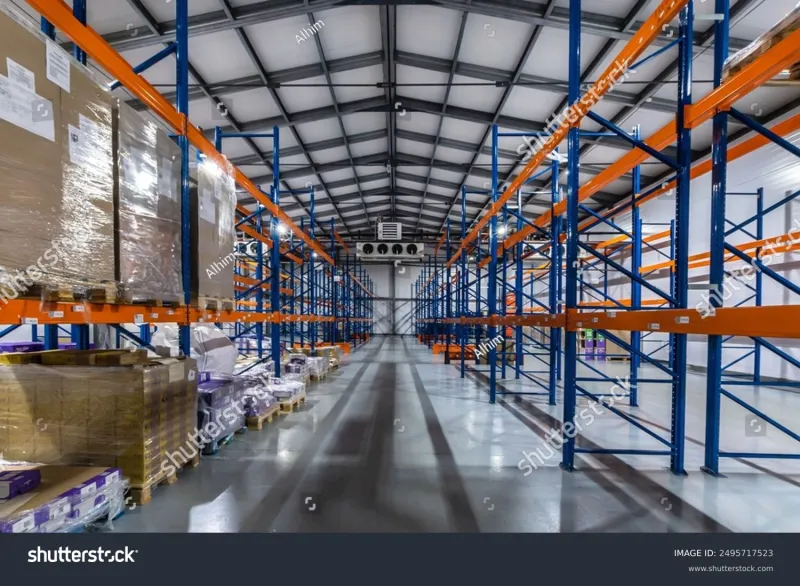
Photo: warehouse returns consolidation area with boxes and forklift inventory management, via www.shutterstock.com
A forward import plan is easy to admire. Purchase orders are issued, production is scheduled, freight is booked, and delivery dates are tracked with precision. The return path is usually less rehearsed. It begins with a customer complaint, a warranty claim, or a batch that failed inspection, and by then the commercial leverage that existed at the sourcing table has often disappeared. The importer is left to negotiate freight, authorization, customs treatment, and disposal while the clock on customer satisfaction is already running.
For US importers, reverse logistics is not merely a customer-service function. It is a sourcing decision with direct consequences for total landed cost, supplier accountability, and brand risk. The most effective time to design the lane home is before the first container sails.
Reverse Logistics Is a Sourcing Decision
The terms that govern a return are frequently set during the original purchase negotiation, whether or not either party recognizes it. Who pays return freight? Who issues the Return Merchandise Authorization, or RMA? Does the supplier accept consolidated returns or only individual units? What qualifies as a warranty defect rather than customer damage? Will the supplier repair, replace, or credit? Who owns the returned inventory once it reaches a consolidation point?
If those questions are unanswered in the supplier agreement, the importer usually absorbs the uncertainty. That absorption may appear as expedited freight, idle inventory, unrecoverable duty, or a write-off that never shows up in the original cost model. A diversified trading house can help frame the reverse lane as part of the total cost of ownership rather than an exception to it.
Map the Lane Before the First Container
A reverse logistics plan does not need to be elaborate, but it does need to be explicit. US importers should map five elements before the first order ships: RMA authorization, consolidation points, customs treatment, refurbishment partners, and final disposition.
RMA Authorization
The RMA is the control point for the entire return. The supplier agreement should identify who issues it, within what time frame, and with what supporting data. Serial numbers, order references, photographs, failure codes, and proof of purchase are common requirements. For high-volume programs, a portal or structured data feed may be preferable to email approvals. The agreement should also state whether the supplier can reject an RMA and what recourse the importer has if it does.
Consolidation Points
Sending individual returned units across an ocean is rarely economical. Importers should identify where returns will be consolidated before they move upstream. That may be a US third-party logistics provider, a regional hub, or the supplier’s own facility. The choice affects transit time, freight cost, and visibility. It also determines whether the importer can batch returns into full-container or less-than-container movements rather than paying parcel rates for scattered units.
Customs Treatment
Returned goods do not automatically re-enter the United States without customs consequences. The treatment depends on origin, prior entry, condition, and the reason for return. US-origin goods returned may qualify for special treatment under the HTSUS, while foreign-origin goods may require a new entry, duty payment, or eligibility for duty drawback. Warranty replacements, repaired goods, and scrap each raise different questions. Importers should involve a licensed customs broker or trade counsel early, and should retain documentation such as proof of export, prior entry records, RMA correspondence, and serial-number tracking. This is not a place for assumptions.
Refurbishment and Final Disposition
Before return volume arrives, the importer should know which partner will inspect, repair, test, and grade returned goods. A refurbishment partner may be the original manufacturer, a domestic service provider, or a specialized third party. Equally important is final disposition: restock, resell, donate, recycle, or destroy. Each path carries different cost, compliance, and documentation requirements. The supplier agreement should assign responsibility for disposal certificates, environmental compliance, and any residual value recovery.
The Agreement Is the Instrument
A reverse logistics appendix in the supplier agreement turns intention into governance. It can define RMA service levels, cost allocation, data requirements, warranty procedures, replacement shipment terms, consolidation responsibilities, and audit rights. It can also establish measurable expectations: RMA cycle time, recovery rate, cost per return, and disposition compliance.
For US importers, the agreement should address the practical realities of domestic returns as well. A customer in Ohio may return a unit to a California warehouse; the supplier may be in Asia; the refurbisher may be in Texas. The agreement should clarify who coordinates each handoff and who bears the cost when a return sits idle.
A Governance Calendar, Not a Crisis Response
Before the first purchase order, assign an owner for reverse logistics. Map the return path. Agree on data fields. Test the RMA process with a small sample. Validate customs treatment with the broker. Select consolidation and refurbishment partners. After launch, review return performance quarterly alongside forward supply metrics.
A return is not a failure of the sale. It is a predictable event in the life of a product. The importer that designs the lane home before the first container sails is not being pessimistic; it is being commercial. The reverse lane is part of the sourcing system, and it deserves a place in the original agreement.